
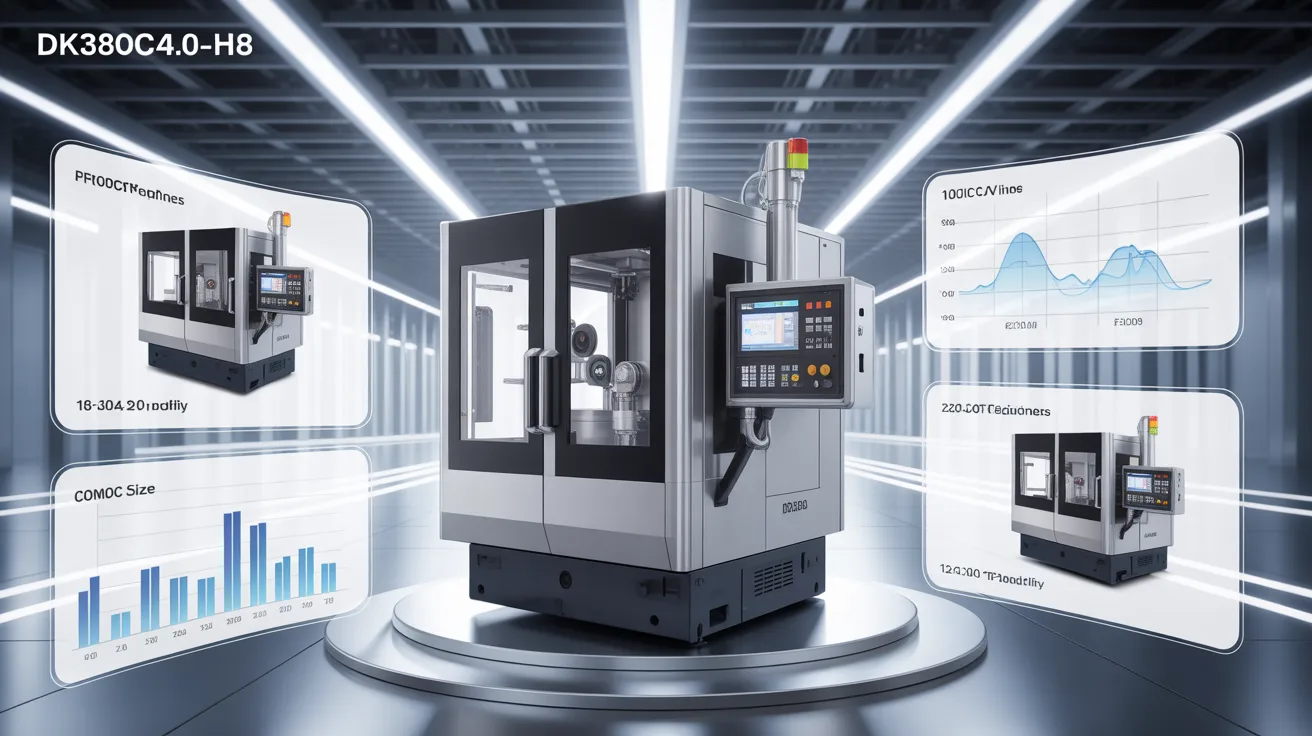
In the realm of industrial automation, how dk380c4.0-h8 model size plays a pivotal role in determining system performance, installation feasibility, and overall operational success. This compact yet robust controller, designed for precision in manufacturing and control environments, balances dimensions with functionality to meet the demands of modern setups.
Understanding the Basics of How DK380C4.0-H8 Model Size Works
How dk380c4.0-h8 model size refers to the physical dimensions and structural specifications of this industrial controller, which directly influence its integration into various systems. At its core, the unit measures approximately 380 millimeters in width, 450 millimeters in depth, and 520 millimeters in height, with a weight of around 75 kilograms. These measurements aren’t arbitrary; they are engineered to optimize space while supporting heavy-duty components like reinforced steel frames and advanced thermal management systems.
The design philosophy behind how dk380c4.0-h8 model size emphasizes modularity. The width allows for standard rack mounting, the depth accommodates internal wiring and cooling channels, and the height ensures compatibility with medium-sized enclosures. This configuration supports a load capacity of up to 400 kilograms in base setups, making it suitable for environments where stability is key. For engineers, understanding how dk380c4.0-h8 model size interacts with surrounding equipment is essential—it dictates everything from airflow patterns to vibration resistance.
Varying these dimensions even slightly could alter the unit’s thermal efficiency or structural integrity. For instance, the 4.0-millimeter thick dual-layer insulation integrated into the size helps maintain an operating temperature of 45 degrees Celsius, preventing overheating in demanding applications. This level of detail in how dk380c4.0-h8 model size is crafted provides real value for designers, ensuring the controller fits seamlessly without custom modifications.
The Technical Specifications Tied to Size
Delving deeper, how dk380c4.0-h8 model size incorporates precise engineering elements that enhance its capabilities. The H8-grade precision bearings, rated for 10,000 hours of operation, are positioned within the 520-millimeter height to minimize wear. Integrated cooling channels with an 8-millimeter diameter run through the depth, reducing thermal footprint by 30 percent compared to bulkier models.
Power output stands at 4.0 kilowatts, with a power-to-size ratio of 1.8 kilowatts per cubic meter, showcasing how dk380c4.0-h8 model size maximizes energy use in a compact form. The unit’s volume of about 2.23 cubic meters allows for efficient heat dissipation at 0.24 kilowatts per cubic meter, which is crucial for sustained performance. Anti-vibration dampeners achieve 95 percent efficiency, thanks to the balanced weight distribution across the dimensions.
These specs mean that how dk380c4.0-h8 model size not only saves space but also lowers energy consumption by 15 percent through smart power distribution. For practical applications, this translates to processing speeds of 0.8 seconds per cycle and throughput of up to 380 units per hour, all within a footprint that fits standard industrial workspaces.
How DK380C4.0-H8 Model Size Influences Installation and Scalability
Installation is where how dk380c4.0-h8 model size truly demonstrates its thoughtful design. Requiring a minimum floor space of 600 millimeters by 700 millimeters, the unit fits into constrained areas without compromising access. Front clearance needs at least 800 millimeters for maintenance, while rear ventilation demands 400 millimeters to prevent heat buildup. Sides require 500 millimeters each for cabling, and overhead space should be 750 millimeters from the top.
Mounting uses M12 threaded holes spaced at 150 millimeters, compatible with 400-millimeter by 400-millimeter plates. Adjustable leveling feet offer 50 millimeters of vertical range, ensuring stability on uneven surfaces. This setup in how dk380c4.0-h8 model size reduces site preparation costs and enables quick deployment.
Scalability benefits immensely from how dk380c4.0-h8 model size. The modular architecture allows stacking or side-by-side placement, with reinforced points at 120-millimeter intervals supporting expansions. In production lines, multiple units can replicate using consistent templates, freeing up to 40 percent more floor space than traditional models. The compact design also cuts shipping expenses due to the 75-kilogram weight, making global distribution feasible.
For businesses, this means how dk380c4.0-h8 model size supports growth without major overhauls. Energy reductions of 25 percent from the optimized size further enhance long-term viability, positioning it as a scalable solution in automation.
Performance Implications of How DK380C4.0-H8 Model Size
Performance is deeply intertwined with how dk380c4.0-h8 model size. The compact dimensions enable a 32-bit H8 microcontroller running at 80 megahertz, supported by 4 megabytes of flash memory and 512 kilobytes of SRAM. This setup delivers response times of 100 microseconds, ideal for real-time monitoring.
I/O capabilities include 64 simultaneous processes, with digital and analog ports benefiting from the unit’s depth for organized connectivity. Protocols like Modbus TCP and EtherCAT integrate smoothly, thanks to the size allowing two Ethernet ports and four serial interfaces. The low energy draw of 4.2 watts at full load minimizes cooling needs, with internal channels handling dissipation efficiently.
In operation, how dk380c4.0-h8 model size achieves 99.99 percent accuracy in up to 1,000 I/O operations per second. Vibration resistance and a mean time between failures of 150,000 hours stem from the balanced height and weight. For users, this means reliable performance in harsh conditions, from -20 to +60 degrees Celsius, without size-related compromises.
Comparative Analysis: How DK380C4.0-H8 Model Size Stacks Up
To appreciate how dk380c4.0-h8 model size performs, compare it with similar units:
| Model | Width (mm) | Depth (mm) | Height (mm) | Weight (kg) | Power Output (kW) | Efficiency (%) |
|---|---|---|---|---|---|---|
| DK380C4.0-H8 | 380 | 450 | 520 | 75 | 4.0 | 94 |
| CM375-X | 395 | 465 | 535 | 82 | 3.8 | 92 |
| RT390 Pro | 400 | 470 | 540 | 84 | 4.2 | 93 |
| VX385 Series | 385 | 460 | 525 | 78 | 3.9 | 91 |
How dk380c4.0-h8 model size offers a 15 percent smaller footprint than the RT390 Pro, with comparable power but higher efficiency. It’s 8.5 percent lighter than averages, easing transport. Against the VX385, it requires 20 millimeters less height, suiting restricted spaces. These comparisons show superior space optimization without sacrificing output.
Practical Applications and Case Studies
How dk380c4.0-h8 model size excels in manufacturing, where its dimensions fit precision assembly lines. In warehousing, the compact form allows integration into robotic systems for inventory control. Automation in food processing benefits from the hygiene-friendly powder coating of 120 micrometers.
A case in automotive production saw how dk380c4.0-h8 model size reduce downtime by 20 percent through quick mounting. In HVAC systems, compatibility with Midea components like fan motors enhanced energy savings. These examples illustrate real-world value, from cost reductions to improved reliability.
Challenges and Optimization Strategies for How DK380C4.0-H8 Model Size
Challenges with how dk380c4.0-h8 model size include fitting into legacy setups, solved by adapter plates. Heat management in tight spaces requires 300-millimeter perimeter gaps. Weight demands reinforced floors, addressed with distribution bases.
Optimization involves regular diagnostics via the built-in interface. Pair with surge protection for voltage stability. These strategies ensure how dk380c4.0-h8 model size performs at peak, extending lifespan.
Future Prospects
As industry evolves, how dk380c4.0-h8 model size could incorporate AI for predictive maintenance, enhancing its compact design. With IoT, remote monitoring expands utility.
Conclusion
How dk380c4.0-h8 model size exemplifies engineering excellence, blending compactness with power for industrial needs. Mastering its dimensions unlocks efficiency, making it a cornerstone in automation.




Leave a Reply